
The Overlooked Value of the 1994 Lincoln Penny
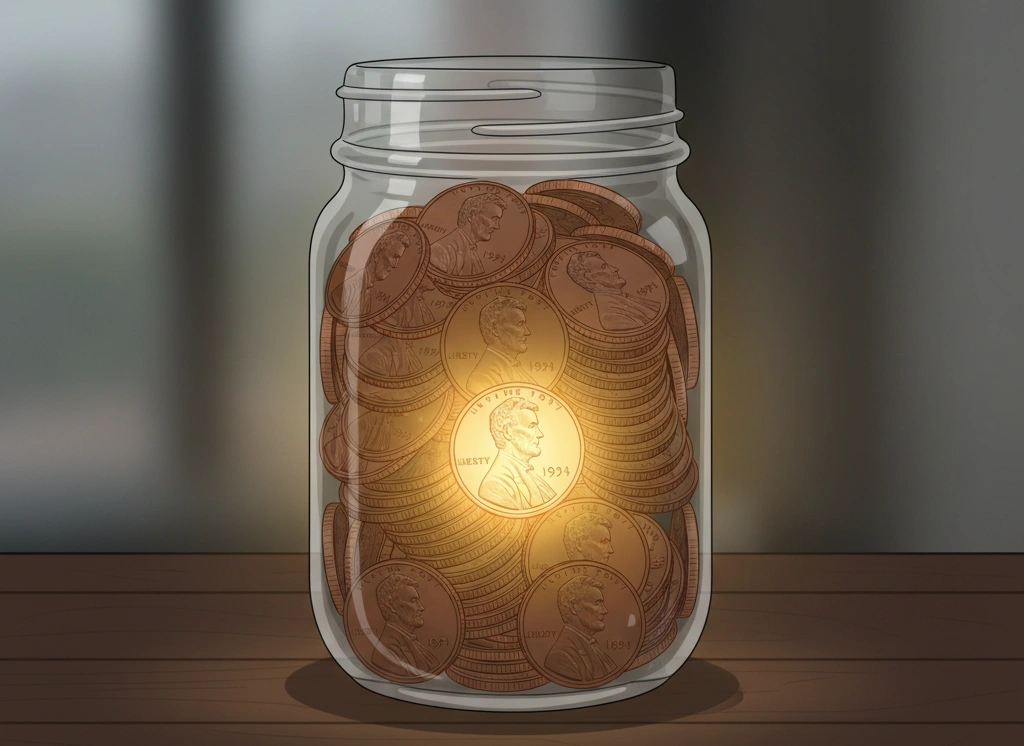
In 1994, the United States Mints in Philadelphia and Denver produced a massive release of one-cent coins featuring the image of Abraham Lincoln.
The total mintage reached 13,632,615,000 specimens, distributed as follows:
Philadelphia (no mint mark): 6,500,850,000 units.
Denver (D): 7,131,765,000 units.
San Francisco (S, Proof): 3,269,923 units.
Despite the multi-billion mintages, specific categories of these coins possess a 1994 penny value significantly exceeding the face value due to specific production conditions and preservation states.
The 1994 issue belongs to the "Copper-Plated Zinc" type introduced in 1982.
The product parameters are strictly regulated:
Core: 99.2% zinc
Coating: 0.8% copper
Total composition: 97.5% zinc, 2.5% copper
Weight: 2.5 grams
Diameter: 19.05 mm
Deviations from these parameters often indicate production defects increasing the market price of the object.
Sheldon Scale and Price Records
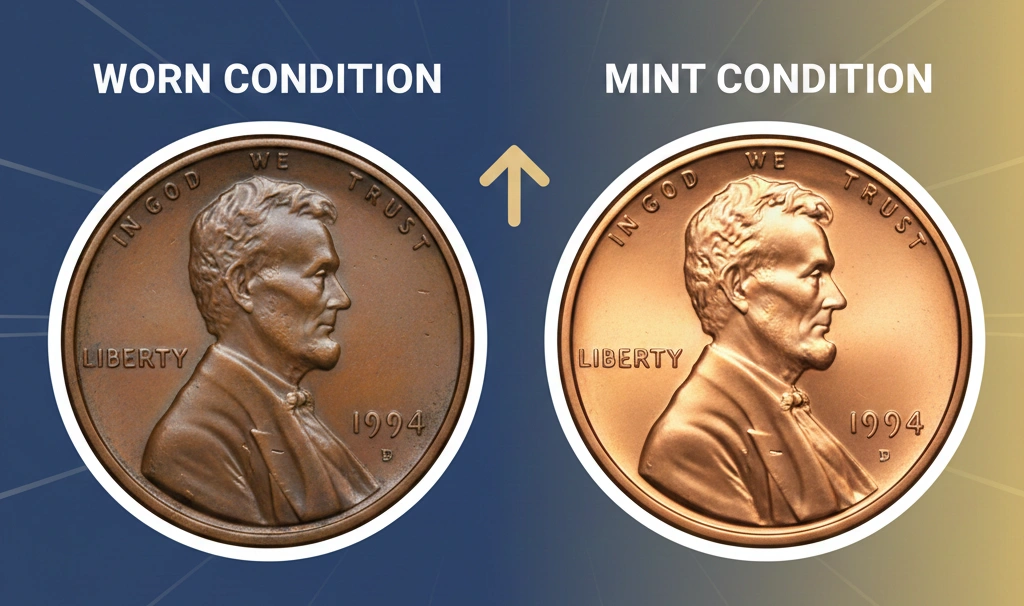
Most 1994 pennies found in circulation feature low grades due to the softness of the zinc core susceptible to corrosion and mechanical damage.
Condition (RD - Red) | 1994 Philadelphia | 1994-D Denver |
MS63 RD | $0.10 - $0.30 | $0.10 - $0.30 |
MS65 RD | $1.00 - $3.00 | $1.00 - $3.00 |
MS67 RD | $15.00 - $35.00 | $10.00 - $25.00 |
MS68 RD | $150.00 - $450.00 | $100.00 - $200.00 |
MS69 RD | $2,000.00+ | $1,500.00+ |
The record price for a 1994-P in MS69 RD grade was recorded in 2023 at the $5,040 mark.
PCGS and a free coin identifier statistics show the existence of only a few specimens in MS69 grade, constituting less than 0.0000001% of the total mintage.
The 1994 Doubled Die Reverse (DDR) Variety
The most significant technical error of this year is the doubling of the image on the reverse side.
Cataloged as FS-801, the error is characterized by the doubling of the Lincoln Memorial columns.
A detailed description of the defect includes the following signs:
Doubling visible in the space between the 1st and 2nd columns, as well as between the 11th and 12th columns.
The presence of additional vertical lines mimicking parts of the architectural structure.
Price indicators for the 1994 DDR (MS67 RD) range from $150 to $350 depending on the prominence of the defect.
The annual value growth for confirmed DDR specimens has averaged 7-9% over the last five years.
Manufacturing Defects and Their Classification
Besides cataloged varieties, sporadic striking errors exist.
Plating Bubbles
Due to a violation of the technology for applying copper to the zinc base, gas accumulates under the metal layer.
This effect is often mistakenly accepted as a mint error, yet it carries no numismatic value except in cases of extreme deformation.
Off-Center Strikes
Displacement of the planchet relative to the die assembly leads to the loss of part of the legend and date.
Displacement Percentage | Estimated Value |
10% - 20% | $15 - $30 |
50% (with date) | $75 - $125 |
50% (without date) | $5 - $15 |
Struck Through Errors
The entry of metal shavings or thick grease into the striking zone leaves indentations or "blurry" areas on the coin.
Specimens featuring a clear imprint of a foreign object are valued at $50–$150.
Investing in 1994 pennies requires an understanding of price volatility for high grades.
An analysis of data over a ten-year period reveals the following trends:
MS66 RD Category: The price remains stable, showing fluctuations within 3% due to the large amount of available material.
MS68 RD Category: A supply shortage is observed at public auctions, causing a price increase of 5% annually.
DDR Errors: The value demonstrates resilience to market downturns, increasing proportionally to the number of new collectors specializing in varieties.
The profitability of reselling coins graded between 2014 and 2024 averaged 45% for top grades.
Verification of Error Authenticity
The process of confirming the value of a 1994 coin involves mandatory instrumental diagnostics.
Using electronic scales allows for identifying coins struck on non-standard planchets.
A weight significantly higher than 2.5g may indicate the use of a copper planchet from previous years, representing an extremely rare and valuable error.
Spectral analysis of the surface with the coin appraisal app is applied to exclude chemical coloring mimicking the rare "Red" (RD) color in old or oxidized coins.
Mintage Survival Statistics
According to expert estimates, over 70% of the 1994 mintage has been lost or removed from circulation due to natural wear.
Of the remaining 30%:
95% possess a grade below MS60.
4.9% are in AU (About Uncirculated) or low MS condition.
Less than 0.1% are suitable for obtaining a grade of MS67 and higher.
The low preservation percentage accounts for the high competition at auctions for coins lacking carbon spots and cleaning lines.
The 1994 Lincoln cent is an object with a high concentration of hidden value in the segment of maximum grades and specific reverse varieties.
The absence of precious metals in the composition is compensated by the rarity of technological anomalies recorded by grading agencies.
Specimens possessing clear doubling of the columns on the reverse or an absence of circulation traces in the MS68 RD grade represent the most stable assets within this annual issue.
Constant monitoring of auction results confirms the maintenance of high demand for coins possessing unique striking characteristics coupled with an ideal surface condition.