
Circulation vs Preservation: The Fate of the 50 Euro Cent
Handling history quietly reshapes value through constant friction and environmental exposure.
Preservation in a controlled environment allows for the development of a market premium over face 50 euro cent value.
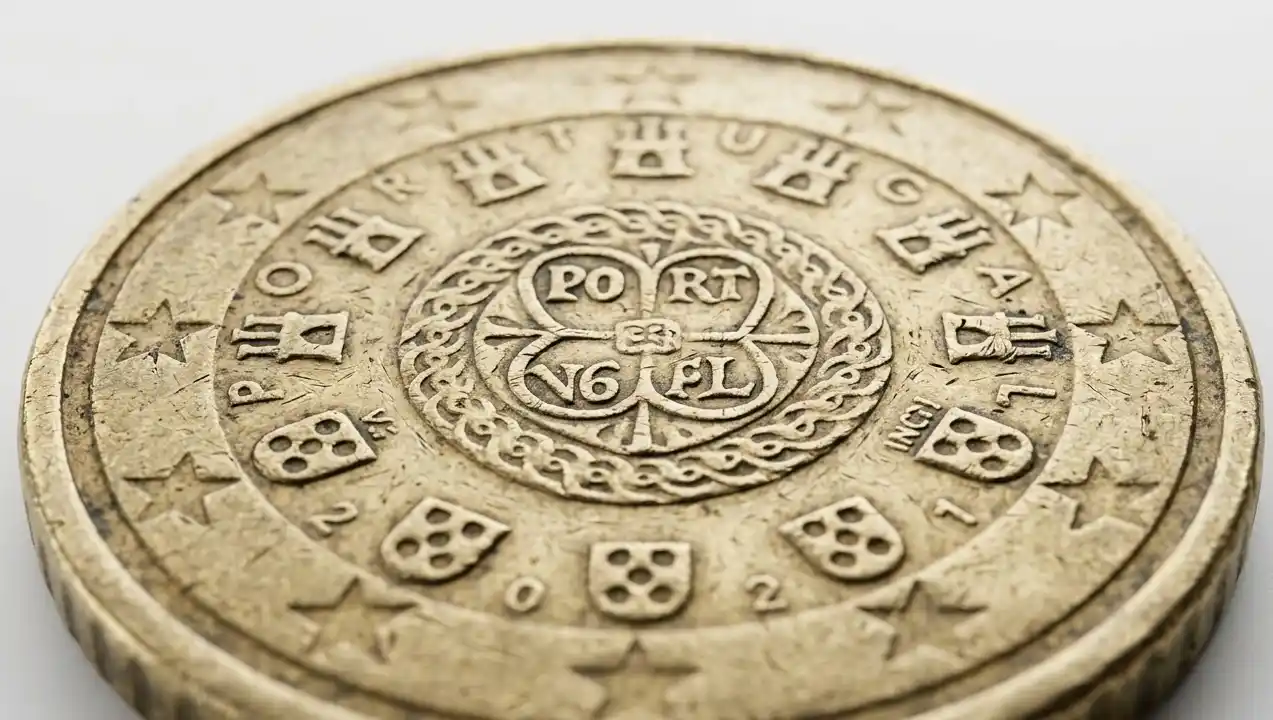
Manufacturing specifications:
Diameter: 24.25 millimeters
Thickness: 2380 micrometers
Edge: Coarse milling for tactile identification
Shape: Perfect circle
High copper content determines the reaction speed when exposed to humidity.
Nordic Gold contains no actual gold despite its visual appearance.
Mechanical Degradation Stages
Daily use subjects the coin to a predictable cycle of damage.
Transaction sequence → Extraction from pocket → Friction against keys → Impact on hard surfaces → Scratches on the relief.
Surface destruction levels:
Contact marks visible only under magnification
Flattening of the highest points on the European map design
Loss of detail in the twelve stars representing the European Union
Total erasure of the mint mark
Statistics indicate that a coin loses 0.01 grams of mass after ten years of heavy circulation.
Minor mass loss does not affect the legal tender status but destroys numismatic potential.
The Rarity Factor: Micro-State Performance
Low mintage numbers create a natural floor for the market price.
Monaco and Vatican City release coins primarily for the secondary market.
Origin State | Release Year | Volume (Pieces) | Price in 2026 |
Monaco | 2006 | 11,180 | 480€ |
Vatican City | 2002 | 65,000 | 195€ |
San Marino | 2003 | 70,000 | 45€ |
Andorra | 2014 | 95,000 | 38€ |
Price volatility for Vatican issues remains low due to consistent demand.
Monaco 2006 50 cent pieces show an annual price increase of 6% over the last four years.
Finding these coins in change is statistically impossible in 2026.
Market Anomalies and Auction Records
Production errors generate high returns for specialized collectors.
A documented 50 cent coin struck on a 1 Euro blank sold for 1,150€ in 2023.
Price dynamics for error types:
Double strike on the obverse side → 600€ to 800€
Missing mint mark (due to filled die) → 15€ to 25€
Rotated die error exceeding 90 degrees → 120€ to 200€
Numerical data proves that errors found in circulation lose 40% of their value compared to those found in mint sets.
Surface dirt on an error coin prevents accurate grading by professional services.
Authentification remains the primary barrier to selling high-value errors.
The Physics of Oxidation and Tarnish
Chemical reactions with sulfur in the air change the coin's color over time.
New coins reflect 85% of light hitting the surface.
Circulated coins from 2002 reflect less than 15% of light in 2026.
Atmospheric impact stages: Bright Gold (Uncirculated) → Dull Yellow (6 months) → Brownish Tint (5 years) → Dark Charcoal (20 years).
Cleaning the metal with acid removes the top layer of atoms.
Harsh cleaning results in a "washed" look that experienced buyers reject instantly.
Micro-pitting occurs when moisture remains trapped against the surface for long periods.
Geographic Distribution and Stamp Wear
Different mints across Europe produce coins with varying levels of detail.
Germany utilizes five locations identified by letters A, D, F, G, and J.
Mint location statistics:
Berlin (A) → High volume, standard detail
Hamburg (J) → Frequently associated with sharp strikes
Paris → Higher tendency for minor bag marks during transport
Heavy pressure during the striking process wears out the steel stamps.
Late-stage strikes show blurry lettering around the rim.
Collectors pay a 10% premium for early-stage strikes with sharp hair details on the portrait or map.
Value Loss: Impact of the 2007 Design Change
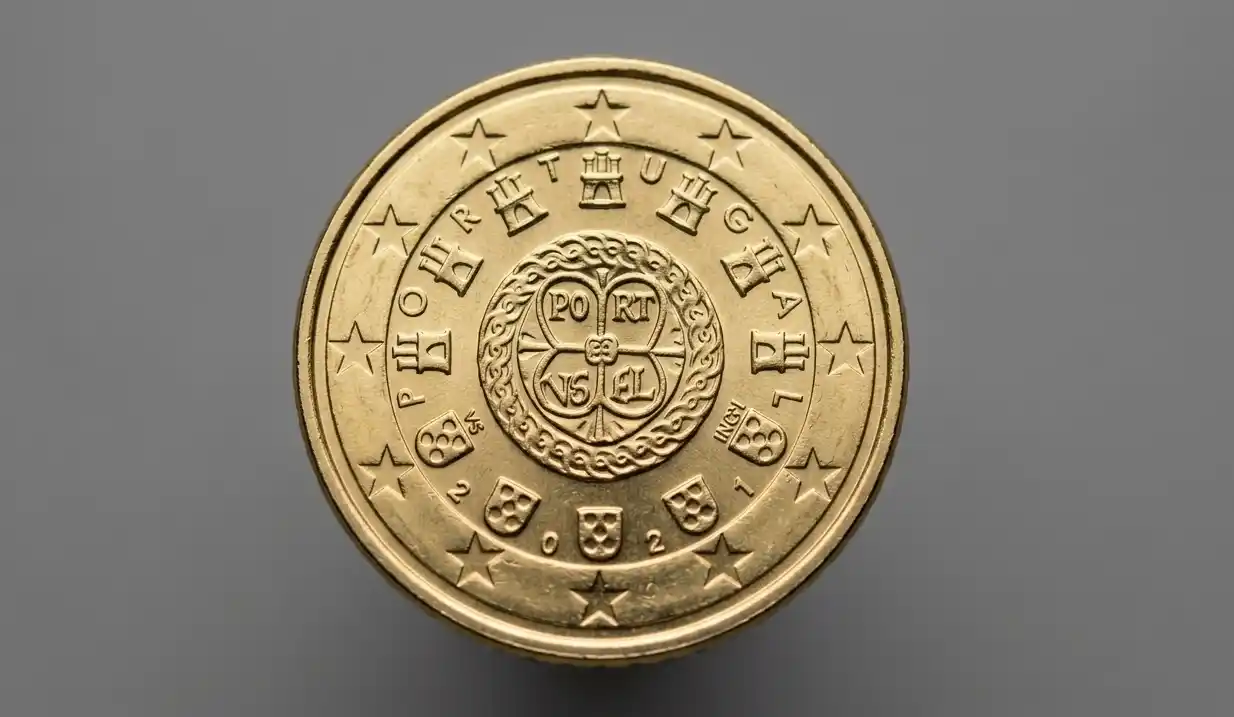
European authorities updated the map design in 2007 to include new member states.
Old map versions (2002–2006) represent 28% of the total 50 cent supply in 2026.
Trend of withdrawal: 2002 coins in circulation → 85% in 2005 → 45% in 2015 → 12% in 2026.
The gradual removal of old designs creates a scarcity effect for high-grade specimens.
Circulated 2002 coins from Germany or France carry zero premium.
Uncirculated 2002 specimens from the same countries sell for 3€ to 5€.
Storage Logic and Long-Term Protection
Preventing contact with oxygen is the only way to stop the degradation of Nordic Gold.
Safe storage methods:
PVC-free plastic flips → Short-term organization
Acid-free paper envelopes → Long-term dry storage
Hard acrylic capsules → Maximum protection against physical impact
Incorrect storage leads to "PVC damage" manifesting as a sticky green residue.
Restoring a coin with green residue is impossible without damaging the metal.
Properly stored 50 cent coins from 2002 still look identical to 2026 releases.
Profitability Ratios for Professional Certification
Grading costs must be compared against the potential increase in resale value.
Average cost for Professional Coin Grading Service: 45€ per coin. Or 0€ for the coin identifier app free.
Profitability Calculation: Current Value 10€ + Grading Cost 45€ = 55€ Total Investment.
If the coin receives a grade of MS67, the market value rises to 120€.
If the coin receives a grade of MS63, the market value remains at 10€.
Only the top 2% of coins from circulation are candidates for successful grading.
Global Trends in Cash Usage
Digital payments have reduced the physical movement of 50 cent coins by 60% compared to 2010.
Lower circulation speed slows down the rate of wear for existing coins.
Banks are minting fewer 50 cent pieces because coins stay in the system longer.
Supply and demand shifts:
Declining supply of new coins → Higher interest in older mint sets
Reduced physical handling → More coins staying in "Good" condition longer
Digital transition → Numismatics becoming a niche high-end investment field
Inflation has reduced the purchasing power of 0.50€ by approximately 45% since 2002.
The metal value of the coin remains significantly lower than the face value.
Finland 2-Euro 50-Cent Error
Fouls at the mint occasionally lead to the use of the wrong size stamps.
A small number of Finnish 50 cent coins were struck with the 2 Euro "S" mark on a star.
Auction results for Finnish errors:
2022 Sale → 180€
2024 Sale → 210€
2026 Estimate → 240€
Annual appreciation for this specific error sits at roughly 7.5%.
Rarity is confirmed by the limited window of production before the error was corrected.
Authentication Procedures for Buyers
Sophisticated tools allow for the detection of high-quality counterfeits.
Digital microscopes revealing flow lines on the metal surface confirm an authentic strike.
Casting marks indicate a fake coin made from a mold.
Condition | Observed Weight | Authenticity Status |
Mint State | 7.80g - 7.82g | Likely Authentic |
Heavily Worn | 7.75g - 7.79g | Normal Wear |
Any Condition | < 7.70g | Suspected Counterfeit |
Any Condition | > 7.85g | Suspected Counterfeit |
The coin value checker testing provides a 100% accurate result because Nordic Gold is non-magnetic.
Counterfeits often use steel cores, which react strongly to magnets.